Adyar - A Glimpse

The city of Chennai is today what urban spaces all around the world hope to be. It is a thriving centre for commercial activity and is the only metropolitan city in southern India, although Bengaluru and Hyderabad are not far behind. The city of Chennai can be dated back to 1639. Although not a part of the original Madras—which dates back to 1639--Adyar today has become a very important residential and commercial area of Chennai.But a look at the area’s colourful past reveals a lot about what it has come to represent now. At varied times it has been a fishing village, home of theology, a centre for the arts, education and social reforms.


Adyar is the area which lies toward the south of the river Adyar, which was once regarded as the southern boundary of the city. It was a fishing village where some paddy cultivation was also practiced. With their rich ecology, the Adyar estuary and creek grew into an abode of migratory birds.

The Marundeeswarar temple, belonging to the Chola period, was already a place of cultural significance. The temple is believed to have been built somewhere in the 7th century A.D. Tirugnanasambandar and Tirunavukkarasarthe Saivite saint poets are believed to have visited the temple and sung its praises, testifying its existence during their lifetime in the 8th century.

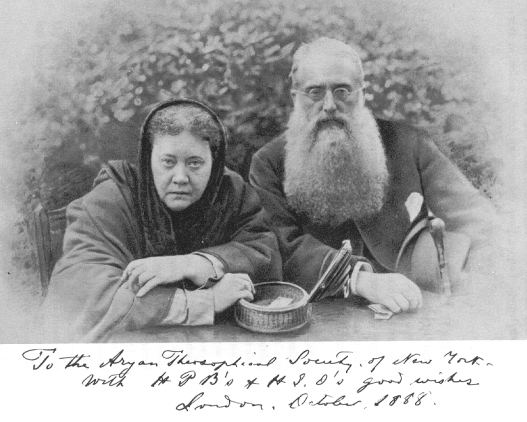
Everything changed in 1883, when Mrs.H.P.Blavatsky and Col.H.S.Olcott decided to relocate their religious organization in the area. The Theosophical Society, which was launched with much fanfare in New York in 1875, attracted a varied crowd to the area.

Madras at this time was still a conservative city and the Adyar area was considered a threat to the established order of the local society and its existing structure. In the year 1888 Mrs. Annie Besant came to Adyar to join the Theosophical society and with that a whole new chapter opened in the organisation’s history. With her entry into mainstream Indian politics the Theosophical society also gained repute throughout the country and attracted a sizable crowd of foreigners to the order.

This influx of a mixed crowd had an impact on the lifestyle of the people who resided here. With vast spaces to be occupied the houses were large and the roads wide. The people who resided here also came to represent a laid back lifestyle which was in keeping with their image as tolerant and cultured people. At this time the interior of the Adyar area was still a gaming reserve and the beach at this time extended upto the Theosophical society. The first residential area, thus, was Gandhinagar due to its proximity to the Theosophical Society.

In 1878 the Elphinstone Bridge was built across the Adyar river and provided relief to the farmers during the famine of that time. Until the bridge was built the residents of the area had to rely on ferry service to get across the river and into Madras.


H.S.Olcott “discovered” Jiddu Krishnamurthi during a walk on the Elliot’s Beach in 1909. The boy was the son of a clerk of the Theosophical society. In 1911, the leadership of the Theosophical Society at Adyar established a new organization, the Order of the Star in the East (OSE), to prepare the world for the expected appearance of the World Teacher. Krishnamurti was named as its Head.

Adyar also became a hub for reformist activities as people influenced by theosophical thought and went on to change the society they inhabited. One such personality was Mrs. Muthulakshmi Reddi. Dr Reddy was actively involved with several orphanage homes and women’s welfare organisations, and initiated measures to improve the medical facilities given to slum dwellers. In 1930, she founded Avvai Home, a home for destitute women and orphans at Besant Avenue, Adyar.

Another important landmark of the area is situated on the Elliot’s Beach in Besant Nagar, the Schmidt memorial. The memorial commemorates the gallantry of Kaj Schimdt, a Dutch sailor, who drowned on December 30, 1930 while helping save other lives.

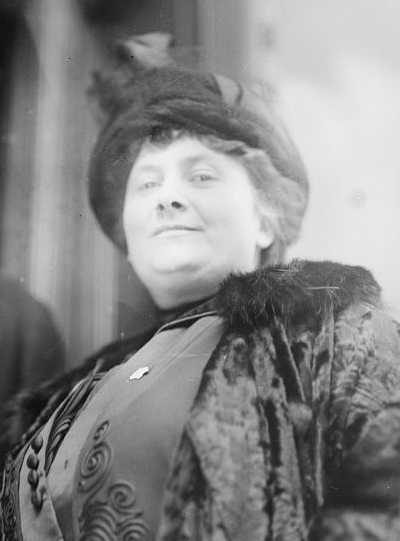
Rukmini Devi Arundale started Kalakshetra inside the Theosophical Society premises in 1936 to bring Bharatanatyam, a dance form practised by Devadasis, to the fore as a classical Indian dance form. She started the Besant Theosophical High School along with her husband George Arundale. In 1939 they invited Maria Montessori, an eminent educationist, to the school to introduce her method of education, and with that the Montessori system took root in India. In the following decades several initiatives followed: the Besant Arundale Senior Secondary School, The College of Fine Arts, The Besant Theosophical High School, The Maria Montessori School for Children, The Craft Education and Research Centre and within the Kalakshetra campus. The U.V.Swaminatha Iyer Library is located close to Kalakshetra.

Adyar is also home to the world’s largest leather research institute. Central Leather Research Institute (CLRI) is the hub of the Indian leather sector. It was founded in the very first year of India’s independence, on April 24, 1948. A.L. Mudaliar, a great visionary and the then Vice-Chancellor of Madras University donated his own land in the vicinity of the University for the establishment of CLRI. He envisioned it as an academic partner of the University whose research and training will help tap the leather production potential of the region.

In 1958 the game reserve in Guindy was transferred to the Madras Forest department and in 1978 it was converted to a National Park and in 1972 a snake park was started near the reserve by Romulus Whittaker.

In 1959 the Indian Institute for Technology Madras was set up in the area with technical and financial assistance from the Government of West Germany. It is regarded as one of the best institutes for technical learning IIT Madras. The institute is also known for the preservation of the Chital or spotted Deer which are found on the premises as the college adjoins the Guindy National Park and was once forest land.

The Gandhinagar club provided the residents of the area with sporting activities, mainly cricket and tennis. In the year 1955 a handful of sports enthusiasts started this club on a piece of land which had been set aside for sporting activities. The club has held fast to its traditions and continues to promote Tennis in the city with very good training facilities.

Film fanatics could visit the Sathya studio to catch a glimpse of their favourite stars. But alas, it has made way for the M.G.R Janaki college of Arts and Science for women. The Jayanthi and Thyagaraja theatres were the preferred movie halls which still exist. Others, like the Eros, have faded away.

The means of transport for connecting to the city was by ferry rides until the first bus route, No.5 from Adyar to Parrys, was initiated in Adyar which lives even today. The most famous bus to have passed through Adyar, however, was 5B from Mylai to T.Nagar.

The Voluntary Health Services came into being as a registered society in 1958, with 25 acres of land approved by the state government in Adyar. With that Adyar gained prominence as a centre for medical health. VHS became a physical entity in 1961 when Prime Minister Jawaharlal Nehru laid the cornerstone of the first block of buildings.

Adyar has a history of near-working class eateries, while the ubiquitous Udipi restaurant has never made a major headway in the areaOn the Sardar Vallabhbhai Patel road are three such eateries which have been around for a considerable period of time, the Coronet hotel, Hotel Runs and the Adyar Bakery.


Hotel Runs, a Kerala hotel in Adyar, has been running since 1964. Mr. Kunhahamed first set up a tea stall in this busy corner of Adyar. As he rushed about serving tea, coffee and buns, an ear ever open to his customers, he would hear them remark at how fast he would run around to keep their cups filled. So when he opened a hotel he chose the name Runs.

The Coronet hotel is located just a short distance from Hotel Runs and like Runs serves Kerala cuisine. Started in 1955 by Ali Hasan the hotel still has the old world ambience.

The Adyar Bakery started as the Gandhinagar Bakery, and was the only branch of McRennett, which was started in 1903. It started off as a small neighbourhood bakery and since this bakery was the only one catering to the whole of Adyar, and not just Gandhinagar, the name was changed to Adyar Bakery. “The initial emphasis was on making breads, after which we graduated to cakes and cookies. The tea-bar cake, which is an English recipe, is unique to the bakery and it remains unchanged till date” Mr R Mukund the current owner of the bakery.


The city, however, has undergone a massive change 80’s and 90’s. Adyar also has had to experience this change and with increasing number of people relocating to Madras Adyar too has transformed. Now Adyar is an important residential and commercial area with its share of restaurants, shopping complexes and Pubs. Elliot’s beach now forms a major part of the Chennai ‘party circuit’. Every convenience can be sought here, with leading consumer brands setting up shop here. For an urban population it has come to symbolise all that is modern. There is, however, some resistance to these changes to be found. But this is confined to people who had experienced the old Adyar and it will be interesting to see how much longer they hold out. The spirit of an area, the lifestyle it came to symbolize for the residents of that area must invariably fade away as is the norm in modern cities.

- Vikram Gopal

Images Courtesy:
Wikipedia
The Hindu

Un-Hiding the Other Side of Adyar

When we think of Adyar, images that crop up are those of a rich and invigorating cultural history and the rich and luscious residential areas of today. However, beyond these socio-cultural edifices of this sprawling Chennai neighbourhood, Adyar is also home to the world’s largest leather research institute. Central Leather Research Institute (CLRI), spread over a 100-acre campus on Sardar Patel Road, is the central hub of the Indian leather sector. It was founded in the very first year of India’s independence, on April 24, 1948.


In 1947, the leather export basket of India included mostly raw hides and skins. There remained an untapped opportunity for India in the leather sector for economic development, employment generation and export earnings. The missing link was addition of technology to the manufacturing base of the sector. Hence, CLRI was founded to develop internal strength in the country to generate, assimilate and innovate technologies for leather sector.

When Prime Minister Jawaharlal Nehru and Council of Scientific and Industrial Research (CSIR) Chairman Shanti Swaroop Bhatnagar conceived it, there were two competing locations for its establishment – Calcutta and Madras. Both the cities had massive clusters of leather production in their vicinity. At this critical juncture, A.L. Mudaliar, a great visionary and the then Vice-Chancellor of Madras University donated his own land in the vicinity of the University for the establishment of CLRI. He envisioned it as an academic partner of the University whose research and training will help tap the leather production potential of the region.

CLRI has been playing this role diligently for the last six decades, employing a ‘tripod approach’. Through its pedagogy program, it trains the trainers from different educational institutes. Moreover, students getting admitted for graduation, masters and even doctorate in Anna University are trained and educated in the CLRI campus. CLRI also provides human resource development facilities through its industrial linkages.

Moreover, due to the synergy created by this research-academia partnership between CLRI and Anna University, today the adjoining clusters of Chrompet, Pallavaram and Ranipet flourish along with other clusters of the country. Today, more than 60 percent of the tertiary level human resource of the national leather sector is borne out of this partnership.

Hence, the trinity of Nehru-Bhatnagar-Mudaliar has successfully created this central hub with direct roles in education, research, training, testing, designing, forecasting, planning, social empowerment and leading in science and technology relating to leather.


However, there have been other leaders too who have made this institute what it is today. Two prominent names among these are Prof.Y. Nayudamma and Dr.T.Ramasami.

Prof.Y. Nayudamma, a visionary who lost his life in the infamous Emperor Kanishka (Air India Flight 182) air crash in 1985 was the second director of CLRI. He contributed a lot to the growth of the institute by establishing close linkages with the Indian leather industry on one hand and international agencies on the other.

Dr.T.Ramasami, who is now the Secretary of Department of Science and Technology, took over the leadership of this institute in January 1996 and gave a new thrust and vision to the institute’s activities. Being an advocate of inclusive growth, he put his efforts behind The Leather Technology Mission launched in 1995.

It is worth noting that of the three million Indians directly employed in the leather industry, 97 per cent have just primary skills. This mission aimed at reaching out to such grass root artisans in the country. It carried both technology and related tools to them. With its efforts ‘Athani’ artisans and ‘Kolhapuri’ chappals went international.

Another important development in 1996 brought CLRI to the center stage to save the livelihoods of thousands of workers. The Supreme Court had ordered the shutting down of around 600 tanneries in Tamil Nadu due to the pollution being caused by them. In response to this, CLRI got together with Indira Gandhi National Open University in a mass campaign which changed the very image of the industry from ‘polluting’ to ‘cleaner’. This model not only saved the jobs of those working in these tanneries but also helped CLRI to reach the unreached manpower of leather tanning at all levels across India. CLRI successfully trained them in cleaner and greener leather processing methods of controlling the effluents and reducing the emissions.

CLRI has not only helped such indigenous workers but has also emerged as a ‘messiah’ for under-developed countries to learn cutting-edge leather technologies. In last few years, CLRI has trained close to 1000 entrepreneurs, industrialists and around 400 executive personnel from over 65 countries in leather processing, product technologies, process safety, safety audit, pollution control, animal/ tannery by-products utilization, etc.

Amongst others, the Leather Industry Development Institute of Ethiopia has been in a constant contact with CLRI for last one decade and has been striving to emulate CLRI through a twinning program. With the help of CLRI, already half of the 22 tanneries in this under-developed African nation have been technologically up-graded.

CLRI’s one pointed goal remains to provide technological support to the world leather industry. It has been striving to gain prestige, pride, economic benefits as well as reverential power in the global scientific leather industrial research for India.

This vision of CLRI is today being realized by a team of dedicated scientists whose efforts have made it one of the most important edifices of not only Adyar but India too.

- Vipul Grover

Images Courtesy:
www.clri.org

AVVAI HOME - Where everyone's welcome

To walk through the gates of Avvai Home is to walk back in time a few decades. To the left is an open space in which lush trees and coconut palms grow freely. Dr. Muthulaksmi’s house stands to the far left of the campus; an old, dilapidated structure. To the right is the Avvai Home Saraswati temple beyond which lies the school and hostel buildings. Outside, the park is empty as the children are in their classrooms attending morning lessons. You almost forget that less than u hundred meters away is L.B. Road and the bustling Adyar signal. 

When the Avvai home campus was built in 1936 it was, along with the Theosophical Society, one of the first few buildings in the area. In fact, until the 1950’s Adyar stretched from Gandhi Nagar to only as far as Kasturba Nagar, beyond which it was mostly jungle. There was hardly any public transport to the area. Neither were there electricity or telephone lines.

Its founder, Dr. Muthulakshmi Reddy was an extraordinary woman. To celebrate Ayudha Puja, the staff and students of the home had set up a Dr. Muthulakshmi themed Golu showcasing various aspects of her life as a student, doctor, mother and visionary. She was the first woman in India to graduate from medical college, the first woman to enter the Indian legislature and also the first woman in the world to preside over a Legislative Assembly. Her time in the legislative assembly was dedicated entirely to the cause of protection of women and children. She brought in many reforms towards this end - the prevention of trading women, the abolition of the Devadasi system, prevention of cruelty to children. 

Dr. Muthulakshmi’s son in an article published in the home’s platinum jubilee magazine recalls the day that saw the inception of Avvai Home. 

‘A few days after returning from our summer retreat in Ootacamund, as I, a boy of ten, was playing in the courtyard of our house at No.6, Randall’s Road (now E.V.K.Sampath Salai), Vepery, two young girls approached our house hesitantly. They told me they had just arrived from Namakkal and had come straight from the station to see my mother. When I told my mother about them, she immediately ran out to meet them. They began to weep when they saw her and explained that they were two sisters from the Devadasi community who had refused ‘dedication’, and having nowhere else to go came to her seeking help and protection. They had read about her in papers and knew of the role she played in the abolishment of the system. The next day my mother sent the girls to what was known as the ‘Non-brahmin hostel’ in Triplicane for admission. When they came back weeping, denied admission on the grounds of being from the Devadasi community my mother was aghast! She told me they were my new sisters and were going to stay.’

Thus began what has now grown into Avvai Home which provides shelter for about 170 girls from marginalized backgrounds, runs a government aided primary and higher – secondary school and a teachers training institute. One of the sisters grew up to become a teacher and the other a nurse. 

After Dr.Muthulakshmi had provided asylum for the two young girls, news of this spread to other parts of Tamil Nadu, they were joined by many women looking for a safe place to go to. Within a year it became imperative to form a formal institution to cater to the growing numbers so Dr. Muthulakshmi rented a house at No.1, Kutchery Road in Mylapore and formerly registered the ‘Avvai Home’ under the Society’s Registration act of 1860. Ms. C.N.Nallamuthu, at that time a lecturer at Queen Mary’s College (later to become its first Indian Principal) was made its first Honorary Warden. The girls were admitted in the National Girl’s High school, Mylapore with the help of a friend Mr. Sesha Iyengar. Avvai Home was the first non-missionary, non- Christian institution in Madras presidency that took in all girls without making any distinction of caste or creed.


A few years later, Dr. Muthulakshmi, while looking for a place Avvai Home could be moved to permanently, came across land near Theosophical society on Elliot’s beach road, now Besant Avenue. Fifty grounds of the land that belonged to Thiruvannamalai Shri Arunachaleswarer Devasthanam was leased out to Avvai Home at Rs.10 per month for 50 years. The building construction was completed by 1936. The children moved to the new campus and attended the Olcott Memorial School and the Besant Theosophical School ( now The School, KFI), which were in the neighbourhood.

The Avvai Home eventually turned into an open-house for women looking to protect themselves and their children. I caught Geethanjali, a twelfth standard student sitting at the Avvai Home Saraswati temple and working on matrices. She along with two other girls her age had come to Avvai Home from Aarkkonam. 

“In my village, I had to travel half an hour by bus to reach school”, she says, “and with the extra classes conducted for students attempting the board exams classes would go on till seven o’ clock after which it was unsafe to travel. Here I am staying in the hostel and the coaching too is far better than the school in Aarkkonam.”

The basic school was started in 1950 within the Avvai Home premises in 1950 with State government aid. In 1952, the teachers training institute was established under the National Council for Teacher’s Education, Research and Training (NCTERT). According to Ms. Sharadha of the Avvai Home administration, this institute is to be shut at the end of the year owing to some issues regarding the land upon which it is located. The high school was established in 1969 after Mrs. Nallamuthu Ramamurthy donated a large sum of money towards it. The school was upgraded to a higher secondary school in 1978. The school now has more than 800 students. The woman behind the academic growth at the home is Mrs. Mandakini Kishnamurthi, wife of Dr.Muthulakshmi Reddy’s second son. She laboured untiringly towards these goals. She was the recipient of many awards one of them the International Education Year Awards 1970 from the United Nations Educational Cultural Organization. She took over as correspondent of the home from 1960 to 2002. Her husband Mr. Krishnamurthi succeeded her. When he retired, Ms. Susheela who is currently the Correspondent, took over and was soon joined by Ms. Rajalakshmi who now holds the post of Secretary. 

Once the girls leave Avvai Home they either join work or get married, said Ms. Sharadha. Most students return to Avvai Home as teachers; 32 out of 35 of the government employed teachers at the high school are from Avvai Home itself. 

One of their students, Velankanni recently become the first person of her community of Vaigirivals to complete her tenth standard. She is still in Avvai Home, now preparing for her twelfth standard board exams.

According to Ms. Sharadha, the home still receives over 30 to 40 applicants for the hostel every year, however, accommodating them all can be difficult. Yet the home is open to anyone seeking help and has to this day maintains the same spirit as they did for the past 80 years.

- Zeenab

Obituary: A Photographer and a Swami

A recent obituary notice in The Hindu said Sreelasree Nachiappa Swamigal of the Koviloor Math had passed away. It was the end of a most unusual life—a successful professional in a number of disciplines connected with the premier art institution of Kalakshetra, who turned a religious head in seventies. His years as a sanyasi were no less eventful than his earlier life, as he took up several activities to promote and expand the religious order he headed, including the running of Vedic schools and opening several new pilgrim centres around the world, besides publications he brought out regularly.


Hailing from Chettinad, Nachi arrived in Kalakshetra as a youngster and came under the influence of Rukmini Devi Arundale. He soon became an understudy of Conrad Woldring, a well known Dutch photographer and in time became a reputed photographer himself. He also trained in printing, his expertise in letter press printing technology making him a much sought after printer in the West after offset printing swept the world, and the old method became almost extinct there. In the 1990s, international celebrities in the arts like Alan Ginsberg, Francesco Clemente and Raymond Foye sought him out to bring out the exotic series of Hanuman Books.

Earlier Nachiappan offered the first microfilming facility in Chennai and many organizations, including newspapers like The Hindu, utilized his services for quite a few years. His Kalakshetra press was also renowned for its reproductions of colour photography. He introduced to Madras the klischograph, an electronic engraving machine that produced letterpress-printing plates directly from an original without the use of any intermediate stages.

As a child, Nachiappan had the good fortune of learning from Maria Montessori during her years in Madras during World War II. He remained devoted to Montessori education all his life, not only running a Montessori school and teacher training centre, but also publishing a whole set of books on the great educationist and her work.

A much travelled man, Nachiappan was always keen to introduce to Kalakshetra and Madras the latest technology he had learnt abroad. He used his knowledge of stage lighting to advantage in Kalakshetra’s dance drama productions. He will probably be remembered best for his excellent work in photography as displayed in his exhibitions and books on Kalakshetra and Rukmini Devi.
Nachiappan was ninety when he passed away.

- V. Ramnarayan

Theosophical Society

If you stand a few meters from the Theosophical society and ask for directions, people will probably give you a blank stare.

Or if you are lucky you would probably hear a person scream, “Keep going straight! It is about 300 meters from the Fashion Folks store.”

It is ironic how the society that mobilized thousands of people during the freedom struggle and the social reform movement is no longer one of the “significant” landmarks of the city.


G. Sundari, fondly called Sundari Teacher in the society, is a third generation theosophist. She talks about the society with immense pride and nostalgia, “A Russian woman named H. P. Blavatsky and an American man Col. H. S. Olcott came to India from America to establish the Theosophical society because this was a country where all religions were represented.”

Coming down south after establishing a centre a centre at Bombay, they established the society in with the help of the rishis and the mahatmas in Madras.

The British and the Anglo Indians stayed near the Adyar River during summer in the early 19th century. Soon Adyar became the centre of all the activities of the Theosophical Society.


Sundari Teacher goes on to talk about the purpose of the society and says, “In the 18th and 19th century, our society was very materialistic and conflicts took place. The world had to be united without any distinction between caste, creed or race. The Theosophical society was started with universal brotherhood as its underlying principle. ”

Theosophy is defined by the theosophists as the wisdom underlying all religions when they are stripped of accretions and superstitions.

Col. Olcott took up various initiatives to create a society without distinctions. He fought for the rights of the Panchamas (a caste division having low socioeconomic status) and founded the Olcott school to provide free education for them.

Ms. Sundari talks about the current role that the society plays, “The activities in the theosophical society range from spiritual, religious and philanthropic activities. The society has undergone various changes, but the fundamental principle of universal brotherhood is what the society continues to operate on.”

The society also has a printing press called the Vasantha Press and a library and a research centre. The Vasantha Press is one of the oldest publishing houses where several books on various topics like history, philosophy and art were published. But the Vasantha Press today just publishes work about the activities of the theosophical society. A monthly magazine called The Theosophist is published every month which reports the activities and events carried out by the theosophical society.

The Theosophical Society, which started in 1882 in a small hall in Adyar, has today metamorphosed into the international headquarters with multiple wings.

Apart from conducting international conventions and wisdom classes every year, this branch today only seems like a centre bustling with administrative functions.

Krishnan, who takes care of the gardens in the Theosophical Society, says, “The Theosophical Society has attracted visitors from across the world. They come here to see various botanical features. The Banyan tree is a special attraction here.”


Visitors of the Theosophical Society marvel at the huge dense trees that run across 400 acres of land. One may probably stop and admire the architecture of the various temples, houses and the Churches within the society.

However, amidst the beauty of the place, the essence and the philosophy of the Theosophical Society seem to be forgotten.

- Tanu Kulkarni

Who's Who in Adyar: Annie Besant

“We are very different for we belong to different nations, yet we are just a happy family, the differences are forming a rich chord. To live in Adyar is as good as to visit many countries.”

These are a few lines from one of the books written by Annie Besant.


Annie Besant who was one of the most dynamic social reform activists of the 18th century and the first woman president of the Indian national Congress, lived in Adyar and called it the most homely place on earth.

Ms. Besant had already been working for the Fabian Society in Europe and was a British social reformer and campaigner for women’s rights.

Ms. Besant read a book named Secret Doctrine, written by H. P. Blavatsky (who was one of the founders of the theosophical society), which focused on the inner history of the world. She was impressed by Blavatsky and decided to work with her at the theosophical society in India. She mobilized people and participated in the Indian national movement.

Ms. Besant soon moved to India and gathered support throughout the country for the home rule movement. Ms. Besant always believed that we should get complete freedom to govern ourselves under the British monarchy. She believed that we should get what we could and then demand for complete freedom. Gandhiji disagreed with her as he wanted complete freedom but he later said that he had made a mistake opposing the home rule movement as she had made it a mantra and it had gained momentum all across the nation.

Sarojini Naidu had once said that Mahatma Gandhi was able to do his work in India because of the foundations laid by Ms. Besant all over India. Sarojini Naidu also mentioned to her that she entered politics because she was influenced by Ms. Besant.

Annie Besant founded a newspaper Commonweal in January 1914. She also purchased the Madras Standard and renamed it New India. She used her paper to convey her propaganda during the home rule movement.

According to G. Sundari, a theosophist, “Besant was one of the greatest orators of the century. People would walk miles just to listen to her under banyan tree at Adyar, where she spoke about India’s freedom.”

Ms. Sundari also added that she would speak exactly for an hour and the last five minutes she would stretch her arms and give gist of the speech so that people would retain the information.

Annie Besant had a huge influence on some of the most prominent people living in Adyar.

The golden jubilee of Theosophical Society, at Madras. Seated in the middle of the front row is Annie Besant and second to her right is J. Krishnamurthi
One person whom Ms. Besant mentored was J. Krishnamurti. He used to live in a poor household near the theosophical society in Adyar. Ms. Besant played the role of his surrogate mother and she proclaimed that Krishnamurthi was to be the World Teacher. An organisation called the Order of the star was formed in 1911 with Krishnamurthi as the head.

Besant had formed the Young Men’s India Association and established the Gokhale Hall. It was a place where people would hold meetings and debates.

Because of the demands made during the home rule movement, the British government arrested her and sent her to Ooty. Gandhiji said that he would march to Ooty as a mark of protest, if she was not released. So the British government released her and she made Home Rule movement a mantra in India.

H. S. Olcott, the founder of the theosophical society nominated her as his successor. She worked in Adyar, which was very close to her heart, and started movements there that spread far and wide. In one of her books she said, “The residents of Adyar form a single body and each person is a cell in that body.”

- Tanu Kulkarni

Images Courtesy:
Hindu Archives

The Glorious ‘Healer’

The story of the ancient temple at Thiruvamiyur


A kilometre away from the Kalakshetra foundation at Thiruvanmayur, sprawled over an acre of land, stands the ancient temple of Lord Marundeeswarar. Believed to be a healer of all ailments, Lord Marudeeshwara, considered an incarnation of Lord Shiva, derives his name from two words---‘Marundu’ which means medicines and ‘Eshwar’ which means ‘God.’

The devotees of the ‘Lord’ believe that the revered sage Valimiki, the author of the Ramayana, had visited this temple and was blessed here. This incident, they say, gave the place its name --- Thiruvanmiyur, is in fact a corrupted version of its original name, Thiruvalmikiyur.

Even though the temple is dated to be at least 1300 years old, there is an ambiguity as to the history of this temple, mainly because renovations have, over the years, have either totally or partially obliterated crucial historical evidences that could have helped date the temple.

Therefore, there are some who date this temple back to the Chola dynasty and claim that some inscriptions engraved both inside the temple itself as well as in other temples of Chennai ascribe it to that era; others argue that the temple belongs to the era of the Pandyan rule over the Tamil land.

In any case, there is enough evidence to show that this temple existed in the 7th century CE; Tirugnanasambandar and Tirunavukkarasar, two prominent Shaivate poet-saints(Nayanars) who lived around the 7th century CE, have sung praises of the temple, proving that the temple existed then.

The temple itself was not a complete structure, for, until very recently, an unfinished Gopuram stood at the front entrance of the temple.

The town of Thiruvanmiyur developed around this temple. The earliest settlers in this place were the priestly classes, who, in search of reasonable accommodation outside the ‘expensive’ city, trickled in. The others --- the ‘pujai’ article vendors, the weavers, the blacksmith, the potters and the sculptors---followed.

Thiruvanmiyur was then a village and like every other village in India, ‘the Varna system’ or the caste system determined the residential arrangements in the village. The ‘upper castes’ lived in the centre of the village while those unfortunate enough to be born into the ostracised Shudra castewere pushed to the outskirts.

A regular day around the huge tank outside the temple would be what some would describe as a ‘typical village scene’; a bullock cart plying people around, a blacksmith beating away at his iron anvil, a potter in one corner, weavers weaving yards of cloth into beautiful saris, a bronze sculptor creating bronze sculptures of the Lord that he would sell to the devotees, while women washed clothes and children bathed in the common tank. This was true until as late as the 1980s, after which the township began to metamorphose into what it is now.

Although an old and a rather ‘symbolic temple’ religiously, not many chose to visit the temple as it lay outside the city limits, leading the temple to a state of disrepair.

It was only the Brahmotsava and more significantly the Theppam or the Float festival which were the real crowd pullers. Brahmotsava is the temples annual 11-day festival was (and still is) conducted in the month of Panguni (March April). Each caste in the village were given a specific day to worship the ’Lord’ in the Brahmotsava, for instance the fisher folk living in the outskirts of the village were given the last day. This tradition was followed well into the 1970s.

The Theppam marked the end of the Brahmotsava. Only one of the two ‘Theppam’ festivals around the city (the other one being in the Kapaleeswarar temple in Mylapore), old residents remember this to be a festival that attracted people from the various parts of the city. It was a grand affair; from making the ‘Theppam’ or the raft for the ‘lord’ to sail, the building of which typically took about three days, to setting it afloat and watching the planks carrying ‘the Lord’ drift slowly to the centre, people participated with great alacrity and numbers. For many, the festival was like a fun-and fair; the golden lights set the entire place aglow and the tantalising aroma of ‘sundal’ wafted through the still air. Women laughingly thronged the shops that sold bangles, trinkets and ribbons; children went about eating their favoured food items.

Over the years, however, the temple festivities have undergone a tremendous change. The Theppam, which was celebrated with such pomp and fervour, had to be stopped in1983 when long dry spell hit Chennai which dried up the water in the tank. It was then replaced by other events like the Kolam festival which was held on the floor of the dry tank but could these could never capture the popular imagination like the Theppam and had to be stopped eventually. The float festival was revived in March this year, in which 50,000 reportedly participated.

Massive renovations to the temple were undertaken in 2009 including finishing the incomplete Gopuram at the entrance and adding a car park outside the temple.

This huge structure that was once nerve centre of the place is now only a small part in the bigger scheme of things. From the tiny hamlet whose commercial activities centred around the temple to the huge IT hub that it is today, the temple has seen the enormous change- a change that, one would hope, does not reduce this historical edifice as just another ‘old’ building.

- Uttara

Montessori in India

A child is a true scientist, just one big question mark. What? Why? How? We never cease to marvel at the recurring miracle of growth, to be fascinated by the mystery and wonder of this brave enthusiasm. This was discovered by Dr Maria Montessori, an Italian physician, who came in contact with children through an unexpected event and began to notice this enthusiasm in them. She was invited for the inauguration of crèche when she realized that children were highly capable of learning. Almost immediately, she had an urge to shape this energy in a very positive manner. However, unlike most others, she did not think of coaching children into something, rather she thought that the best thing to do was to let them free. Let their imagination run wild and explore the unknown in the way they wanted to. The observations and results of this were what are widely practised today throughout the globe.


India, where mythology and tradition give Education the status of God, was undoubtedly among the ones to benefit. Worshipping Goddess Saraswati has always been a practice in India. But, with changing times, the education system had to evolve and it did. One of the developments in early education was brought about by Dr Montessori and the venue for her first experiment was Madras, as it was then called, a city where the need for primary education was given great importance even during the turbulent times of struggle for independence. It is not a surprise then, that it served as the fertile ground in which one of the most significant modern spiritual-social-educational movements, The Theosophical Society, took root in India. 

The arrival of Madame Helena Blavatsky and Col. Henry Olcott in the 1870s slowly started changing the educational landscape in Madras. They started the Theosophical Society in India in the year 1875 with an aim of spreading the message of Universal Brotherhood. It was established in Adyar, which was quite the southernmost part of Madras and the society was formed hugging the banks of the Adyar River and the seashore. 


After Olcott’s death in 1907, Dr Annie Besant took over as the president of the Society. With her Irish roots, she saw many parallels between India’s fight for autonomy and the Irish struggle. She was already the president of the English lodge of the Theosophy before presiding over the Society in India. Twenty-three years younger than Besant, it was entirely possible that Maria was influenced by such a strong woman during her growing years. Maria hadn’t sprung from nothingness either. She was the heir to a long legacy of humanitarians, scientists, philosophers and educationists. All her life, she studied, lectured, wrote, read and ceaselessly pursued her goal. 

For twenty years, between the First World War to the start of the Second World War, Maria Montessori worked incessantly, assisted by her son Mario, and the Association Montessori Internationale (AMI), which she founded in 1929. 

She came to India in 1939, because of a recommendation by Dr Besant. Dr Montessori was 69 then. People came from all over India to attend the course. People like Ms Gool Minwala, travelled for three and a half days, all the way from Karachi to take the course. The period of Maria’s stay in India proved to be one of the most important phases of her life, regenerating her philosophy, her method, allowing children in the 6-12 age groups to expand and give the Montessori movement a momentum. When she arrived in India, she was given a grand welcome and the fact that Dr JRD Tata flew her personally gives an idea of the impact of her arrival.


The first course for training teachers to teach children was inaugurated on the 11th of November, 1939 by the Rt. Rev. Dr GS Arundale, the President of the Theosophical Society and honorary member of the Association Montessori Internationale (AMI). The course was held in the compound of the Theosophical Society in Adyar. Palm leaf huts were built for taking classes. Dr Montessori lectured in Italian and the lectures were translated in English by Mario Sr., who was a companion, friend and guide to her.

After beginning a grass root movement in India, Dr Montessori left India in 1949. The period after that was challenging for India. This period was very significant for India as a nation. India had transformed itself from being a nation thirsting from home rule to a growing international power, on the verge of asserting itself on the world stage. Everything about the country had grown and so had it changed about Adyar, where the Montessori movement had started – its population, its economy, its political power and its self-image. The Montessori movement too, evolved from being a sapling planted and tended to by Dr Montessori herself, to a sturdy tree which had started to bear its own fruits. It hadn’t been a smooth ride and it was not without its share of hiccups, disappointments and setbacks. But all in all, the movement had in it the will to keep moving forward. It had started in Adyar as a drop of water. Over the years it became a trickle and then a steady stream and now it has morphed into a flowing river. 

Ms Rukmini, a student of the AMI, has now started Navadisha, a Montessori Teachers’ Training Institute in Chennai. “The child is the eternal Messiah who is sent among fallen men to uplift themselves, their nation, the world and the heavens. I am just being a part of this entire process by trying to provide a little help in my own way,” she says.

- Vinaya Patil

The legacy of Tamil thatha

The classicism of Tamil literature and the masterpieces that make it classical bring to mind great palaces, poets endowed with immense talent, and an immeasurable appreciation of what the quills sang. To think all these are preserved in one 68-year old library, with inadequate funds, in Thiruvanmiyur can be a bit of a letdown.

However, the U. V. Swaminatha Iyer Research Library is one of its kinds in South Asia, both in terms of its history, its contents and its potential.


Dr. Swaminatha Iyer lived in a time that possessed an incomplete awareness, let alone knowledge, of Tamil literature. Once, after a chance encounter with an associate, he received a frail document to decipher, a document he quickly realized with a shock was the Jeevaka Chintamani, one of the five great epics, the Aymperum Kaappiangal.

His discovery prompted him to search for other lost epics of Tamil literature. Soon, he was going from door to door in hundreds of towns and villages in and around Tamil Nadu, begging for the Tamil people to give up any old manuscripts they might have had to be preserved. The alternative then, unamusingly, was for their use in cooking fires.

Kalyanasundaram Iyer, his son, offered the entire treasure trove after the passing of his father Rukmini Devi in 1942.

On the advice of her husband, Dr. George Arundale, she accepted the gift and initially stored the collection in the Theosophical Society's library. With grants from the central and state governments, a building was constructed in Thiruvanmiyur to house the collection in 1967.


Formally established in 1943, one year after the death of Dr. Iyer, the research library bears fitting tribute to a man of great intellect and even greater perseverance. This was demonstrated when he collected all five of the epics, the others being Silappathikaram, Thirukkural, Kundalakesi and Valayapathi, apart from over 21,000 books and 3,100 palm leaf manuscripts.

In accordance with the facilities at the library’s disposal, the books are categorized into three: transcribed and published, transcribed and unpublished, and non-transcribed. The latter already number on the greater side of 400. With dwindling interest in the services of this remarkable facility, their preservation is beginning to pose a tremendous problem – both to the administration as well as to the language itself.


V. Jagannathan, an independent Tamil scholar, has used the library and admires it fervently – both for what it is and what it could be. Many a time making use of the transcribed works to aid in his translations of the Silappathikaram and the Thirukkural, he says, “These are works that cannot be found anywhere in the world. They are preserved in their original forms here. It is really depressing to see them so uncared for.”

He explains that the transcription and lamination processes were begun later than they should have, in 2006. Even now, Dr. Jagannathan observes, the influx of funds remains a concern. Enough has been provided by the government and the Kalakshetra foundation for micro-filming and fumigation of the texts. “However, with the internet, the library has the fantastic opportunity to make these texts quickly available for free and in a form accessible to many youngsters.”

What does the future look like, then? The title of Mahopadhyaya was conferred on Dr. Iyer in 1906, meaning “the greatest of the great teachers”, and how have we honoured his lessons?

M. V. Pasupathy, honorary curator of the library, has emphasized the need for virtual libraries, abetted by awareness programs on history and heritage that draw in more people to sustain its preservation. The hope, evidently, lies with the hundreds of scholars and their use of the library every year. It is from the appreciation of their efforts that we can embark once more upon a journey that will revive the splendour of Tamil classical literature as well as our beloved Tamil thatha.

- Mukundh Vasudevan

Images Courtesy:
The Hindu

IIT Madras: Glimpses of Heritage

Adyar holds a significant place in the hearts of many people born and brought up here. These are people who have seen Adyar from the time it used to get pitch dark at seven pm-with little or nostreet lighting- to its present IT corridor avatar and from the founding of the Theosophical Society to the establishment of Tidel Park. It evokes varied emotions. Some respect Adyar as sons of the soil while others talk about it like proud parents who have seen their child grow over the years.

One of the many reputed institutions to develop in the serene surroundings of Adyar is the Indian Institute Technology, Madras. In July 1956, when Prime Minister Jawaharlal Nehru visited the Federal Republic of Germany (FRG) for strategic discussions, India was offered German assistance for setting up a technical institute in India. Bringing the sustained efforts of the Indo-German cooperation to fruition, Prof. Humayun Kabir, Minister for Scientific Research and Cultural Affairs, broke ground on 31st July 1959 by laying a stone tablet, in an open field located between the Central Leather Research Institute (CLRI) and the AC College of Technology. IIT Madras became one of the four institutes for higher technical education in India recommended by a high level government committee. In time, Prof. B. Sengupta took charge as the first director and the first batch of 120 students stayed in the Saidapet hostel, a rented building opposite the Guindy Race tracks. Frequent interactions resulted in the second and third Indo-German accords which strengthened the academic programmes with special emphasis on research.


The 632 acres of land that was granted by the government of Madras State for establishing the institute was made up of approximately 300 acres of lush wooded area belonging to the Guindy National Forest, about 100 acres of paddy fields and irrigation tanks, and the rest a part of the Taramani village. Dante Alighieri rightly said that beauty awakens the soul to act. So, the daunting task of converting the land into a habitable area without causing any damage to the rich flora and fauna was initiated in October 1959. The first sod was turned for the first departmental building, the Building Sciences Block (BSB). Simultaneously, work started for the construction of the central workshops and the Krishna and Kaveri hostels. IIT moved to its present premises in 1961. The offices of the director and the administration moved into BSB from their borrowed premises in CLRI and classes for the first two batches started here.


Gradually, the administrative block and the Open Air Theatre (OAT) were inaugurated. The period from 1967 to 1973 was one of consolidation, expansion and establishment of new centres in the IIT. A modest library, which started in the premises of AC College of Technology, developed into a full-fledged modern facility with its own building in the present property by July 1967. The computer centre was inaugurated in 1973 with generous aid from the USA and Germany. By this time many campus facilities had been developed including a post office, State Bank of India branch, the hospital building, the Electrical Sciences Block (ESB), the Mechanical Sciences Block (MSB) and the Humanities and Sciences Block (HSB). A staff hostel, eight hostel blocks and a guest house were also instituted. The stadium was completed in 1964 on the eve of the third inter IIT sports and cultural meet and was inaugurated by the Nawab of Pataudi, the Indian cricket captain. The metrology and steam laboratory, thermodynamics and combustion laboratory were established by 1967. A transport facility for the campus residents was introduced with a unique feature of ‘moving’ buses named after mountains- Kailash, Nandadevi, Kanchanjunga and Gowrishankar. Earlier, the practice of naming the ‘static’ hostels after the names of ‘dynamic’ rivers had been initiated.


Convocations have assumed special significance in the history of IIT Madras. The Chief Guests at the convocations have been outstanding national leaders, government dignitaries, scientists, technologists, entrepreneurs and spiritual leaders. The first convocation address was delivered by Dr. S Radhakrishnan, the then President of India, on 11th July, 1964 in OAT.


Several student activities have been initiated, including shaastra, saarang and departmental festivals. The cultural programmes started off as inter-hostel and inter-collegiate competitions in the 1960s, transformed into a national cultural fest called Mardi Gras and then blossomed into a very popular cultural extravaganza, Saarang, in 1996. Bharat Utsav, a festival to celebrate India and Indian values was organised annually between 1994 and 2001. The technical festival of the institute, Shaastra, was inaugurated in the year 2000. Publication of student magazines like Focus, Spectator and Campastimes in the 1960s and the extra-mural lectures later were important events in the literary calendar of the students. Many outstanding personalities from various walks of life have visited the institute over the years.


According to Prof. Ajit Kolar, Department of Mechanical Engineering, IIT Madras, ‘a glimpse at the early history and campus development in the first decade of the institute reveals that the basic infrastructure of the campus was in place and the academic programmes had taken root in this phase. Looking back, one is amazed at the meticulous planning and the hectic activity of that period that made it possible to accomplish so much in such a short time.’

- Snehil Sinha

Who's Who in Adyar: Kalki Krishnamurthy

The 9th of September 2011 marked the 112th birth anniversary of ‘Kalki’ R. Krishnamurthy, a freedom fighter, social crusader, novelist, short story writer, journalist, humorist, satirist, travel writer, script-writer, poet, critic and connoisseur of the arts. His writings include over 120 short stories, 10 novelettes, five novels, three historical romances, editorial and political writings and hundreds of film and music reviews. He is best known for his historical romances, which are immensely popular and are considered classics in Tamil literature.

R.Krishnamurthy was born on September 9, 1899 at Puttamangalam in a poor Brahmin family. After completing his primary education in the village, Krishnamurthy joined the National High School at Tiruchi. Mahatma Gandhi's speech at a public meeting in Tiruchi, as part of the Non-Cooperation Movement in 1921, inspired Krishnamurthy. He was one among the thousands of students who gave up their studies to participate in the movement. He left school and joined the Indian National Congress when his Secondary School Leaving Certificate (SSLC) examination was just three months away.


In 1922, he was imprisoned for a year for participating in the independence struggle. While in prison he met veteran Congress leader C. Rajagopalachari (Rajaji) and T. Sadasivam. In 1923 he joined as a sub-editor in Navasakthi, a Tamil periodical edited by Tamil scholar and freedom fighter V. Kalyanasundaram, popularly known as "ThiruViKa". He left Navasakthi in 1928, joined Rajaji at the Gandhi Ashram in Tiruchengode in Salem district and helped him edit Vimochanam, a Tamil journal devoted to propagating prohibition. In 1931, he was again imprisoned for six months. 

In 1929, Krishnamurthy joined Ananda Vikatan, a weekly edited and published by S.S. Vasan, as its de facto editor. He wrote under the pen names of "Kalki", "Ra. Ki", "Tamil Theni", "Karnatakam" and so on. Vikatan published many of his short stories and novels (as serials). In 1941 he left Ananda Vikatan and rejoined the freedom struggle and was incarcerated for three months. On his release he and Sadasivam started Kalki. He was its editor until his death on December 5, 1954. 

His historical novels, Parthiban Kanavu (Parthiban's Dream), Sivakamiyin Sapatham (Sivakami's Vow) and Ponniyin Selvan (Ponni's Son) were first serialised in Kalki, and later published as books between 1943 and 1951. These novels were re-published eight times between 1984 and 1999. His Tamil translation of Gandhi's autobiography, My Experiments with Truth, was published as Satya Sothanai. Kalki considered Alai Osai, which won him the Sahitya Akademi award posthumously in 1956, as his best. The novel was serialised in Kalki in 1948-49 and published as a book in 1963. His other social novels include Thyaga Bhoomi (The land of sacrifice) and Kalvanin Kadali (Bandit's sweetheart), both of which have been filmed. Thyaga Bhoomi, serialised in Ananda Vikatan, dealt with women's rights and untouchability. It was made into a film by veteran director, K. Subrahmanyam. But the film was banned, after a successful run for six weeks, by the colonial Government on the grounds that it indirectly aroused the people to fight for freedom. S. Krishnaswamy, film historian and son of Subrahmanyam, made a tele-serial of the story in Hindi. Parthiban Kanavu, Kalvanin Kadali and Poiman Karadu were also filmed. Kalki also made a significant contribution to the cause of Tamil music by leading a movement to convince Carnatic musicians to include more Tamil songs in their concerts.


Kalki, however, did not remain free from criticism and controversies. He was accused of being a propagandist and a supporter of royalty. He was embroiled in controversy when he did not subscribe to an observation by a respectable writer that Subramanya Bharati was a "mahakavi". The writers of his time also accused Kalki of plagiarism. Later, Kalki admitted that the themes of some six or seven were adaptations.

Notwithstanding the accusations, Kalki has gone down in history as a renaissance man whose main concern was to arouse people's consciousness against colonial rule, to remind the people of their cultural heritage, and to instill pride in the greatness of Tamil language, literature, art, and culture.

On 9 September 1999, a postage stamp in honour of Kalki was released as part of his birth centenary celebrations. Semmalar, the monthly organ of the Tamil Nadu Progressive Writers Association, also brought out a special number to commemorate Kalki's centenary. The celebrations were also marked by the publication of a number of new books, which included Kalki: Selected Stories by Penguin Books and Kalki Kalanjiyam by Vanathi Pathippagam. The book was an English translation of 12 selected short stories of Kalki by his grand-daughter Gowri Ramnarayan. On 6 December 2007 playwright ‘Crazy’ Mohan released two books, “Paalatril Oru Pagarkanavu” and “Kalki Valartha Kalaigal,” which included a collection of music and drama criticism by ‘Kalki’ R. Krishnamurthy.


On 9 September 1996, the Kalki Krishnamurth Memorial Trust Award was instituted by the Krishnamurthy Memorial Trust managed by Kalki Krishnamurthy’s son, K.Rajendran. Vijay Siva, one of the foremost vocalists in classical Carnatic Music, was the first recipient of the award. In 2000, flute artist, Sikkil Mala Chandrashekhar was honoured with the Kalki Centenary Award. In 2005, Carnatic vocalist, Sikkil Gurucahran became the youngest to receive the award.

In 2000 the Kalki Sadasivam Memorial Trust Award was instituted to recognize excellence in advertising in Tamil with equal emphasis on social purpose and creativity. The Trust also gives scholarships to top students of advertising, public relations and mass communication. This year the16th Kalki Krishnamurthy Memorial Award was presented to two talented young artists, violinist Nagai Sriram and Carnatic vocalist Saketharaman. The Kalki Krishnamurthy Memorial Trust also increased the total quantum of scholarships to be distributed to brilliant students from economically poor background to 2.85 lakhs this year.

Although, December 5th this year will mark 57 years since Kalki was laid to rest, he will continue to live through his indelible works. He will be remembered forever for his efforts in propagating Khadi, promoting the Swadeshi movement, encouraging the arts and crafts of Tamil Nadu, abolishing untouchability and championing women’s education.

- Vishal Matthew

Kaj Schmidt Memorial - Stranded on the beach

On 27th September 2011 eleven inebriated youngsters plunged into the Bay of Bengal from the Elliot’s beach shoreline. One of them was washed away; never to return, three were rescued by hawkers and the rest were chased out of the turbulent waters by ‘alert’ police guards, who as usual arrived late on the scene.

The whole incident unfolded, ironically, in front of a dilapidated white structure built to commemorate the gallantry of Kaj Schmidt, a Dutch sailor, who drowned on December 30, 1930 while helping save other lives. Popularly known as the Kaj Schmidt Memorial the architectural landmark is an inextricable part of the Elliot’s beach situated in Besant Nagar.


Strategically located at the heart of the beach, the floundering cenotaph is surrounded by a large expanse of sand on all sides. The derelict stone monument has been lying in ruins ever since it was last renovated by the Corporation of Madras in 1984. Widely known and referred to as the ‘Ghori’- which is the Hindi word for white- because it is painted in white; the neglected Schmidt Memorial really looks gory today.

The Memorial is fortified on all sides by a fencing of broken pieces of alcohol bottles --as innumerable as the grains of sand-- left behind by drunkards after their mundane brawls. The innocuous structure, at present, not only serves as a bar but also as a public latrine. Men, young and old alike, use the cover provided by it to relieve themselves and to answer nature’s call. Kaj Schmidt Memorial has also been a silent witness to many clandestine kisses and excessive public display of affection by young couples. Lifelong relationships have been forged and transient ones have been terminated before its unassuming eyes. However, the couples’ have made it pay a heavy price for the free entertainment they have offered. They have cruelly scarred the structure’s fair skin by eternally etching their love stories on it. Meanwhile, vandals, who probably did not have Berger easy clean paints at their houses, have used the monument as a canvas to draw horrendous masterpieces. 

The Schmidt Memorial now and then also functions as a non-government organisation by being a home for the homeless. It also humbly poses to photographers, amateurs and professionals alike, who exploit its spectacular silhouette against the background of the setting sun. Thus, in every sense the Kaj Schmidt Memorial is a symbol of oppression, persecution and victimization. It can possibly be taken up as a subject in subaltern studies.


However, until recently, the Schmidt Memorial held an elite distinction. It was one of the most sought after shooting locations in Kollywood. In the late 80’s and late 90’s there were hardly any movies produced which did not feature the Memorial in a song sequence. Popular songs which catapulted the memorial to fame were: Madras-a Suthi paarkka porenn in May Maadham, Oh Pyaari Pani Puri in Poove Unakkaaga, Anjala in Vaaranam Aayiram, Panivizhum Maalaiyil in Meera and Yaaradi Naan Thedum in Pondaatti Thevai. Films like Kaadhal Kavithai, Vinnukkum Mannukkum, Paarvai Ondre Podhume, Dhil, Alaipayuthey, Mouna Raagam, Idhaya Thamarai, and Baana Kathadi also showcased it and made it a famous landmark for the Chennaiites. One of the shots in Zoom Channel’s rehashed version of ‘Miley Sur’ featured south-Indian actor Vikram singing the song with the Schmidt Memorial as the backdrop.

Old residents of Besant Nagar and the hawkers at Elliot’s Beach recollect how the Schmidt Memorial used to be decked up and given a makeover by the film production crew during every shoot. It would then be forgotten and treated as a rag until the next film crew pitched its tent on Elliot’s Beach.

In March, 2007 the Elliot’s Beach beautification plan was prepared by MEASI for the Chennai Corporation. The plan included setting up landscaped lawns, an amphitheatre, children’s play area, toilets, fountains, and a walkway leading to the sea. But the plan appallingly failed to address the modification or renovation of the Schmidt Memorial. However, the plan was dropped after residents mooted out the idea and protested its violation of the Coastal Regulatory Zone (CRZ) notification which did not permit development within a 200-metre zone of the high tide line.


In January 2009, the Governor’s bungalow at Elliot’s Beach-- a stone’s throw away from the Schmidt Memorial-- was renovated at an estimated cost of 23 lakh. Located within 30 metres of the sea, the bungalow clearly violated the CRZ notification; still the government went ahead with the project. Even in this case the Schmidt Memorial remained a helpless onlooker, rooted to its unstable foundation, just as it did when it witnessed the drunken youth get lapped up by the sea.

Drowning off Elliot’s Beach has been accidental, suicidal or sometimes homicidal in nature. According to city police records, 24 persons killed themselves in the sea off the Marina and Elliot's beaches in 2010 while 61 others died of accidental drowning. Police say that there has been a four-fold increase in the number of drowning deaths since 2009 when there were only 20 cases reported.

For the past 80 odd years, the Kaj Schmidt Memorial has been a poignant reminder of the dangers that the sea poses, but still the governments over the years have not moved a finger either to beef up security along the beach or to give the crumbling edifice a face-lift.

Everyone seems to have washed their hands off the Schmidt Memorial. Hope civil society and the government will join hands to salvage it before it is washed away forever from our minds by a Tsunami.

- Vishal Matthew

The Adyar Library - Where history lives on

I was a bit disappointed when I first saw the Adyar library and Research centre . The building looked nothing like what I had imagined it to be, which was an old colonial style building, French windows and all. The present building, constructed and opened in 1968 is not half as old as the Madras literary society building or the Connemara public library, but the 2,00,000 lakh books and the 20,000 meticulously conserved palm leaf manuscripts speaks of the sheer wealth this library possesses.


The library was founded by the Colonel Olcott in 1886 as his own private book collection with just 200 books he collected during his many travels. It was first, situated in the headquarters building of the theosophical society. To suit growing needs it was shifted to a larger, more spacious building. The books here include rare indological publications among works on different religions, philosophies and cultures in several languages.

The Adyar Library and Research Centre (A.D.R.C) is a closed library where the members need to choose the book they desire to borrow form a cataloug and then a library assistant would bring the book from the three storey air conditioned storage rooms. “This practice is done to conserve and maintain these rare books which may get infected leading to degeneration due to excessive contact” said C.A.Shinde, the librarian here, who has been working here for the society for 6 years.

Research scholars from all over the world come to this library to gain access to some of the works in this library. The priceless possessions of the library include Chinese Triptakas, Tibetan Tanjur and Kanjur and various other journals form all over the world. The library also has a separate display room to showcase some of the rare books in its possession which is open to visitors. Books given to Annie Besant by H.G wells and letters written by Rabindranath Tagore too have been displayed here.


Dr. K.Kunjunni Raja , the senior Sanskrit scholar and author of The Indian theories of meaning , was closely associated with the A.D.R.C. He was an honorary director of the library of the library from 1980 after he retired from the Sanskrit department of the Madras University.

“Photocopies and micro copies of the rare books and also of the palm leaf manuscripts are allowed with prior permission and a nominal charge. Some of these books here, especially the Indian publications are one of a kind, this is done so that these publications can be recreated for other works”, Jayashree, a library employee said. “The manuscripts and other books of great value and rarity may be consulted only in the presence of one of the library assistants” she added.

The library is open only to registered users and a member must first become a reader member for a year and only then can he or she be allowed to borrow. The reader member can access the reading rooms which also contains subscriptions over 100 magazines. It is open on all days except Mondays from 9 a.m to 4 p.m.

- Vishal Menon

Voluntary Health Services

Of the many hospitals in Adyar today, the one which has seen it change from a quiet estate of theosophy to a buzzing centre of modernism is Voluntary Health Services or VHS as it’s popularly called. VHS was the first major hospital in all of Adyar and the first voluntary hospital in the state. The hospital was constructed on a land where once occasional cows came grazing and tractors and cycles made long trails.

Voluntary Health Services came into being as a registered society in 1958, with 25 acres of land approved by the state government in Adyar. VHS became a physical entity in 1961 when Prime Minister Jawaharlal Nehru laid the cornerstone of the first block of buildings. The out-patient services, the diagnostic laboratory and the X-Ray department were started even as the first block was under construction.

VHS was the brainchild of Dr. K. S. Sanjivi, a man of immense discipline and scholarship. He believed that masses had to be educated about health and hygiene; that it was not possible sitting in the comforts of a hospital room. It was here that he emphasized on field trips. He saw them as part and parcel of a doctor’s routine. Dr. Sanjivi advocated a preventive approach towards diseases. To cater to the different sections of society, several branches were set-up in the outskirts of Madras. All these mini-health centres acted like veins carrying the life-giving blood to the heart: VHS, Adayar.

 
Being a semi-government body, VHS mainly survived through beneficiaries. The first donation came from the Madras Race Club, that of Rs 5 lakh and the proceeds from a day’s racing. Several top medicos in Madras agreed to serve freely in VHS. Balasubramaniam Ramamurthi, considered as the Father of Neurosurgery of India, started the Neurosurgical Centre in the hospital in 1977-1978. A group of eminent citizens of Madras such as the editor of The Hindu K. Srinivasan, the legal luminary T.R.Venkatarama Sastriar, the Congress leader M. Bhaktavatsalam and the industrialist M.A. Chidambaram also gave their support. All throughout, VHS has been focusing on the marginal sections of the society. They were treated for little or no fee. It is precisely because of this reason that the government supported VHS with an annual grant. 
With the demise of Dr. Sanjivi 10 years ago, VHS has gradually turned into a ship without a rudder. The consultation fee has seen an exponential increase. X-ray, which cost five rupees a few years ago now costs hundreds. There are more entry barriers for the poor than ever. This has gone against the spirit with which the hospital was created. Dr. Sarojini, a veteran physician who has been working in VHS for over four decades says, “Back then the team of doctors went on field trips on their own expenses. But now, the young doctors are not interested in field trips. They are always on a look-out to escape from this place and join a private hospital”.


Today, a walk from Madhya Kailash to the Adyar Bridge opens up many private homes and dental clinics. Malar hospital, the biggest and priciest of all, lies left to the bridge. There are plenty of hospital advertisement boards too, and the eyes slowly get apathetic to them. The sheer quantity creates a delusion that the health services have become extensive and inclusive. But the very purpose has changed. Hospitals have become businesslike in their approach. There are more and more hospitals in the pipeline; some are in their twilight years too. Amongst all these, VHS seems to stand like an old lighthouse. Whether it will be swept by the wave of change or stand upright, is something which remains to be seen. 

- Subin Paul 

Images Courtesy:
www.vhs-chennai.org