Showing posts with label Education. Show all posts

Un-Hiding the Other Side of Adyar

When we think of Adyar, images that crop up are those of a rich and invigorating cultural history and the rich and luscious residential areas of today. However, beyond these socio-cultural edifices of this sprawling Chennai neighbourhood, Adyar is also home to the world’s largest leather research institute. Central Leather Research Institute (CLRI), spread over a 100-acre campus on Sardar Patel Road, is the central hub of the Indian leather sector. It was founded in the very first year of India’s independence, on April 24, 1948.


In 1947, the leather export basket of India included mostly raw hides and skins. There remained an untapped opportunity for India in the leather sector for economic development, employment generation and export earnings. The missing link was addition of technology to the manufacturing base of the sector. Hence, CLRI was founded to develop internal strength in the country to generate, assimilate and innovate technologies for leather sector.

When Prime Minister Jawaharlal Nehru and Council of Scientific and Industrial Research (CSIR) Chairman Shanti Swaroop Bhatnagar conceived it, there were two competing locations for its establishment – Calcutta and Madras. Both the cities had massive clusters of leather production in their vicinity. At this critical juncture, A.L. Mudaliar, a great visionary and the then Vice-Chancellor of Madras University donated his own land in the vicinity of the University for the establishment of CLRI. He envisioned it as an academic partner of the University whose research and training will help tap the leather production potential of the region.

CLRI has been playing this role diligently for the last six decades, employing a ‘tripod approach’. Through its pedagogy program, it trains the trainers from different educational institutes. Moreover, students getting admitted for graduation, masters and even doctorate in Anna University are trained and educated in the CLRI campus. CLRI also provides human resource development facilities through its industrial linkages.

Moreover, due to the synergy created by this research-academia partnership between CLRI and Anna University, today the adjoining clusters of Chrompet, Pallavaram and Ranipet flourish along with other clusters of the country. Today, more than 60 percent of the tertiary level human resource of the national leather sector is borne out of this partnership.

Hence, the trinity of Nehru-Bhatnagar-Mudaliar has successfully created this central hub with direct roles in education, research, training, testing, designing, forecasting, planning, social empowerment and leading in science and technology relating to leather.


However, there have been other leaders too who have made this institute what it is today. Two prominent names among these are Prof.Y. Nayudamma and Dr.T.Ramasami.

Prof.Y. Nayudamma, a visionary who lost his life in the infamous Emperor Kanishka (Air India Flight 182) air crash in 1985 was the second director of CLRI. He contributed a lot to the growth of the institute by establishing close linkages with the Indian leather industry on one hand and international agencies on the other.

Dr.T.Ramasami, who is now the Secretary of Department of Science and Technology, took over the leadership of this institute in January 1996 and gave a new thrust and vision to the institute’s activities. Being an advocate of inclusive growth, he put his efforts behind The Leather Technology Mission launched in 1995.

It is worth noting that of the three million Indians directly employed in the leather industry, 97 per cent have just primary skills. This mission aimed at reaching out to such grass root artisans in the country. It carried both technology and related tools to them. With its efforts ‘Athani’ artisans and ‘Kolhapuri’ chappals went international.

Another important development in 1996 brought CLRI to the center stage to save the livelihoods of thousands of workers. The Supreme Court had ordered the shutting down of around 600 tanneries in Tamil Nadu due to the pollution being caused by them. In response to this, CLRI got together with Indira Gandhi National Open University in a mass campaign which changed the very image of the industry from ‘polluting’ to ‘cleaner’. This model not only saved the jobs of those working in these tanneries but also helped CLRI to reach the unreached manpower of leather tanning at all levels across India. CLRI successfully trained them in cleaner and greener leather processing methods of controlling the effluents and reducing the emissions.

CLRI has not only helped such indigenous workers but has also emerged as a ‘messiah’ for under-developed countries to learn cutting-edge leather technologies. In last few years, CLRI has trained close to 1000 entrepreneurs, industrialists and around 400 executive personnel from over 65 countries in leather processing, product technologies, process safety, safety audit, pollution control, animal/ tannery by-products utilization, etc.

Amongst others, the Leather Industry Development Institute of Ethiopia has been in a constant contact with CLRI for last one decade and has been striving to emulate CLRI through a twinning program. With the help of CLRI, already half of the 22 tanneries in this under-developed African nation have been technologically up-graded.

CLRI’s one pointed goal remains to provide technological support to the world leather industry. It has been striving to gain prestige, pride, economic benefits as well as reverential power in the global scientific leather industrial research for India.

This vision of CLRI is today being realized by a team of dedicated scientists whose efforts have made it one of the most important edifices of not only Adyar but India too.

- Vipul Grover

Images Courtesy:
www.clri.org

AVVAI HOME - Where everyone's welcome

To walk through the gates of Avvai Home is to walk back in time a few decades. To the left is an open space in which lush trees and coconut palms grow freely. Dr. Muthulaksmi’s house stands to the far left of the campus; an old, dilapidated structure. To the right is the Avvai Home Saraswati temple beyond which lies the school and hostel buildings. Outside, the park is empty as the children are in their classrooms attending morning lessons. You almost forget that less than u hundred meters away is L.B. Road and the bustling Adyar signal. 

When the Avvai home campus was built in 1936 it was, along with the Theosophical Society, one of the first few buildings in the area. In fact, until the 1950’s Adyar stretched from Gandhi Nagar to only as far as Kasturba Nagar, beyond which it was mostly jungle. There was hardly any public transport to the area. Neither were there electricity or telephone lines.

Its founder, Dr. Muthulakshmi Reddy was an extraordinary woman. To celebrate Ayudha Puja, the staff and students of the home had set up a Dr. Muthulakshmi themed Golu showcasing various aspects of her life as a student, doctor, mother and visionary. She was the first woman in India to graduate from medical college, the first woman to enter the Indian legislature and also the first woman in the world to preside over a Legislative Assembly. Her time in the legislative assembly was dedicated entirely to the cause of protection of women and children. She brought in many reforms towards this end - the prevention of trading women, the abolition of the Devadasi system, prevention of cruelty to children. 

Dr. Muthulakshmi’s son in an article published in the home’s platinum jubilee magazine recalls the day that saw the inception of Avvai Home. 

‘A few days after returning from our summer retreat in Ootacamund, as I, a boy of ten, was playing in the courtyard of our house at No.6, Randall’s Road (now E.V.K.Sampath Salai), Vepery, two young girls approached our house hesitantly. They told me they had just arrived from Namakkal and had come straight from the station to see my mother. When I told my mother about them, she immediately ran out to meet them. They began to weep when they saw her and explained that they were two sisters from the Devadasi community who had refused ‘dedication’, and having nowhere else to go came to her seeking help and protection. They had read about her in papers and knew of the role she played in the abolishment of the system. The next day my mother sent the girls to what was known as the ‘Non-brahmin hostel’ in Triplicane for admission. When they came back weeping, denied admission on the grounds of being from the Devadasi community my mother was aghast! She told me they were my new sisters and were going to stay.’

Thus began what has now grown into Avvai Home which provides shelter for about 170 girls from marginalized backgrounds, runs a government aided primary and higher – secondary school and a teachers training institute. One of the sisters grew up to become a teacher and the other a nurse. 

After Dr.Muthulakshmi had provided asylum for the two young girls, news of this spread to other parts of Tamil Nadu, they were joined by many women looking for a safe place to go to. Within a year it became imperative to form a formal institution to cater to the growing numbers so Dr. Muthulakshmi rented a house at No.1, Kutchery Road in Mylapore and formerly registered the ‘Avvai Home’ under the Society’s Registration act of 1860. Ms. C.N.Nallamuthu, at that time a lecturer at Queen Mary’s College (later to become its first Indian Principal) was made its first Honorary Warden. The girls were admitted in the National Girl’s High school, Mylapore with the help of a friend Mr. Sesha Iyengar. Avvai Home was the first non-missionary, non- Christian institution in Madras presidency that took in all girls without making any distinction of caste or creed.


A few years later, Dr. Muthulakshmi, while looking for a place Avvai Home could be moved to permanently, came across land near Theosophical society on Elliot’s beach road, now Besant Avenue. Fifty grounds of the land that belonged to Thiruvannamalai Shri Arunachaleswarer Devasthanam was leased out to Avvai Home at Rs.10 per month for 50 years. The building construction was completed by 1936. The children moved to the new campus and attended the Olcott Memorial School and the Besant Theosophical School ( now The School, KFI), which were in the neighbourhood.

The Avvai Home eventually turned into an open-house for women looking to protect themselves and their children. I caught Geethanjali, a twelfth standard student sitting at the Avvai Home Saraswati temple and working on matrices. She along with two other girls her age had come to Avvai Home from Aarkkonam. 

“In my village, I had to travel half an hour by bus to reach school”, she says, “and with the extra classes conducted for students attempting the board exams classes would go on till seven o’ clock after which it was unsafe to travel. Here I am staying in the hostel and the coaching too is far better than the school in Aarkkonam.”

The basic school was started in 1950 within the Avvai Home premises in 1950 with State government aid. In 1952, the teachers training institute was established under the National Council for Teacher’s Education, Research and Training (NCTERT). According to Ms. Sharadha of the Avvai Home administration, this institute is to be shut at the end of the year owing to some issues regarding the land upon which it is located. The high school was established in 1969 after Mrs. Nallamuthu Ramamurthy donated a large sum of money towards it. The school was upgraded to a higher secondary school in 1978. The school now has more than 800 students. The woman behind the academic growth at the home is Mrs. Mandakini Kishnamurthi, wife of Dr.Muthulakshmi Reddy’s second son. She laboured untiringly towards these goals. She was the recipient of many awards one of them the International Education Year Awards 1970 from the United Nations Educational Cultural Organization. She took over as correspondent of the home from 1960 to 2002. Her husband Mr. Krishnamurthi succeeded her. When he retired, Ms. Susheela who is currently the Correspondent, took over and was soon joined by Ms. Rajalakshmi who now holds the post of Secretary. 

Once the girls leave Avvai Home they either join work or get married, said Ms. Sharadha. Most students return to Avvai Home as teachers; 32 out of 35 of the government employed teachers at the high school are from Avvai Home itself. 

One of their students, Velankanni recently become the first person of her community of Vaigirivals to complete her tenth standard. She is still in Avvai Home, now preparing for her twelfth standard board exams.

According to Ms. Sharadha, the home still receives over 30 to 40 applicants for the hostel every year, however, accommodating them all can be difficult. Yet the home is open to anyone seeking help and has to this day maintains the same spirit as they did for the past 80 years.

- Zeenab

Montessori in India

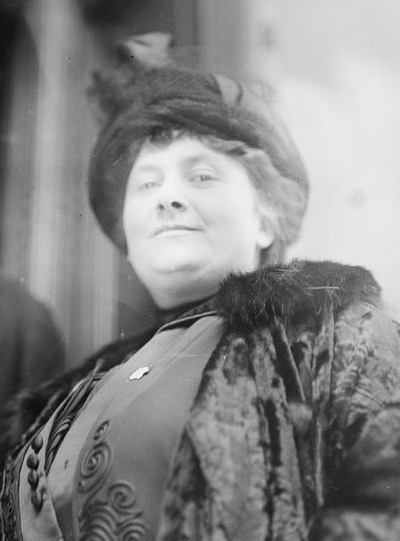
A child is a true scientist, just one big question mark. What? Why? How? We never cease to marvel at the recurring miracle of growth, to be fascinated by the mystery and wonder of this brave enthusiasm. This was discovered by Dr Maria Montessori, an Italian physician, who came in contact with children through an unexpected event and began to notice this enthusiasm in them. She was invited for the inauguration of crèche when she realized that children were highly capable of learning. Almost immediately, she had an urge to shape this energy in a very positive manner. However, unlike most others, she did not think of coaching children into something, rather she thought that the best thing to do was to let them free. Let their imagination run wild and explore the unknown in the way they wanted to. The observations and results of this were what are widely practised today throughout the globe.


India, where mythology and tradition give Education the status of God, was undoubtedly among the ones to benefit. Worshipping Goddess Saraswati has always been a practice in India. But, with changing times, the education system had to evolve and it did. One of the developments in early education was brought about by Dr Montessori and the venue for her first experiment was Madras, as it was then called, a city where the need for primary education was given great importance even during the turbulent times of struggle for independence. It is not a surprise then, that it served as the fertile ground in which one of the most significant modern spiritual-social-educational movements, The Theosophical Society, took root in India. 

The arrival of Madame Helena Blavatsky and Col. Henry Olcott in the 1870s slowly started changing the educational landscape in Madras. They started the Theosophical Society in India in the year 1875 with an aim of spreading the message of Universal Brotherhood. It was established in Adyar, which was quite the southernmost part of Madras and the society was formed hugging the banks of the Adyar River and the seashore. 


After Olcott’s death in 1907, Dr Annie Besant took over as the president of the Society. With her Irish roots, she saw many parallels between India’s fight for autonomy and the Irish struggle. She was already the president of the English lodge of the Theosophy before presiding over the Society in India. Twenty-three years younger than Besant, it was entirely possible that Maria was influenced by such a strong woman during her growing years. Maria hadn’t sprung from nothingness either. She was the heir to a long legacy of humanitarians, scientists, philosophers and educationists. All her life, she studied, lectured, wrote, read and ceaselessly pursued her goal. 

For twenty years, between the First World War to the start of the Second World War, Maria Montessori worked incessantly, assisted by her son Mario, and the Association Montessori Internationale (AMI), which she founded in 1929. 

She came to India in 1939, because of a recommendation by Dr Besant. Dr Montessori was 69 then. People came from all over India to attend the course. People like Ms Gool Minwala, travelled for three and a half days, all the way from Karachi to take the course. The period of Maria’s stay in India proved to be one of the most important phases of her life, regenerating her philosophy, her method, allowing children in the 6-12 age groups to expand and give the Montessori movement a momentum. When she arrived in India, she was given a grand welcome and the fact that Dr JRD Tata flew her personally gives an idea of the impact of her arrival.


The first course for training teachers to teach children was inaugurated on the 11th of November, 1939 by the Rt. Rev. Dr GS Arundale, the President of the Theosophical Society and honorary member of the Association Montessori Internationale (AMI). The course was held in the compound of the Theosophical Society in Adyar. Palm leaf huts were built for taking classes. Dr Montessori lectured in Italian and the lectures were translated in English by Mario Sr., who was a companion, friend and guide to her.

After beginning a grass root movement in India, Dr Montessori left India in 1949. The period after that was challenging for India. This period was very significant for India as a nation. India had transformed itself from being a nation thirsting from home rule to a growing international power, on the verge of asserting itself on the world stage. Everything about the country had grown and so had it changed about Adyar, where the Montessori movement had started – its population, its economy, its political power and its self-image. The Montessori movement too, evolved from being a sapling planted and tended to by Dr Montessori herself, to a sturdy tree which had started to bear its own fruits. It hadn’t been a smooth ride and it was not without its share of hiccups, disappointments and setbacks. But all in all, the movement had in it the will to keep moving forward. It had started in Adyar as a drop of water. Over the years it became a trickle and then a steady stream and now it has morphed into a flowing river. 

Ms Rukmini, a student of the AMI, has now started Navadisha, a Montessori Teachers’ Training Institute in Chennai. “The child is the eternal Messiah who is sent among fallen men to uplift themselves, their nation, the world and the heavens. I am just being a part of this entire process by trying to provide a little help in my own way,” she says.

- Vinaya Patil

IIT Madras: Glimpses of Heritage

Adyar holds a significant place in the hearts of many people born and brought up here. These are people who have seen Adyar from the time it used to get pitch dark at seven pm-with little or nostreet lighting- to its present IT corridor avatar and from the founding of the Theosophical Society to the establishment of Tidel Park. It evokes varied emotions. Some respect Adyar as sons of the soil while others talk about it like proud parents who have seen their child grow over the years.

One of the many reputed institutions to develop in the serene surroundings of Adyar is the Indian Institute Technology, Madras. In July 1956, when Prime Minister Jawaharlal Nehru visited the Federal Republic of Germany (FRG) for strategic discussions, India was offered German assistance for setting up a technical institute in India. Bringing the sustained efforts of the Indo-German cooperation to fruition, Prof. Humayun Kabir, Minister for Scientific Research and Cultural Affairs, broke ground on 31st July 1959 by laying a stone tablet, in an open field located between the Central Leather Research Institute (CLRI) and the AC College of Technology. IIT Madras became one of the four institutes for higher technical education in India recommended by a high level government committee. In time, Prof. B. Sengupta took charge as the first director and the first batch of 120 students stayed in the Saidapet hostel, a rented building opposite the Guindy Race tracks. Frequent interactions resulted in the second and third Indo-German accords which strengthened the academic programmes with special emphasis on research.


The 632 acres of land that was granted by the government of Madras State for establishing the institute was made up of approximately 300 acres of lush wooded area belonging to the Guindy National Forest, about 100 acres of paddy fields and irrigation tanks, and the rest a part of the Taramani village. Dante Alighieri rightly said that beauty awakens the soul to act. So, the daunting task of converting the land into a habitable area without causing any damage to the rich flora and fauna was initiated in October 1959. The first sod was turned for the first departmental building, the Building Sciences Block (BSB). Simultaneously, work started for the construction of the central workshops and the Krishna and Kaveri hostels. IIT moved to its present premises in 1961. The offices of the director and the administration moved into BSB from their borrowed premises in CLRI and classes for the first two batches started here.


Gradually, the administrative block and the Open Air Theatre (OAT) were inaugurated. The period from 1967 to 1973 was one of consolidation, expansion and establishment of new centres in the IIT. A modest library, which started in the premises of AC College of Technology, developed into a full-fledged modern facility with its own building in the present property by July 1967. The computer centre was inaugurated in 1973 with generous aid from the USA and Germany. By this time many campus facilities had been developed including a post office, State Bank of India branch, the hospital building, the Electrical Sciences Block (ESB), the Mechanical Sciences Block (MSB) and the Humanities and Sciences Block (HSB). A staff hostel, eight hostel blocks and a guest house were also instituted. The stadium was completed in 1964 on the eve of the third inter IIT sports and cultural meet and was inaugurated by the Nawab of Pataudi, the Indian cricket captain. The metrology and steam laboratory, thermodynamics and combustion laboratory were established by 1967. A transport facility for the campus residents was introduced with a unique feature of ‘moving’ buses named after mountains- Kailash, Nandadevi, Kanchanjunga and Gowrishankar. Earlier, the practice of naming the ‘static’ hostels after the names of ‘dynamic’ rivers had been initiated.


Convocations have assumed special significance in the history of IIT Madras. The Chief Guests at the convocations have been outstanding national leaders, government dignitaries, scientists, technologists, entrepreneurs and spiritual leaders. The first convocation address was delivered by Dr. S Radhakrishnan, the then President of India, on 11th July, 1964 in OAT.


Several student activities have been initiated, including shaastra, saarang and departmental festivals. The cultural programmes started off as inter-hostel and inter-collegiate competitions in the 1960s, transformed into a national cultural fest called Mardi Gras and then blossomed into a very popular cultural extravaganza, Saarang, in 1996. Bharat Utsav, a festival to celebrate India and Indian values was organised annually between 1994 and 2001. The technical festival of the institute, Shaastra, was inaugurated in the year 2000. Publication of student magazines like Focus, Spectator and Campastimes in the 1960s and the extra-mural lectures later were important events in the literary calendar of the students. Many outstanding personalities from various walks of life have visited the institute over the years.


According to Prof. Ajit Kolar, Department of Mechanical Engineering, IIT Madras, ‘a glimpse at the early history and campus development in the first decade of the institute reveals that the basic infrastructure of the campus was in place and the academic programmes had taken root in this phase. Looking back, one is amazed at the meticulous planning and the hectic activity of that period that made it possible to accomplish so much in such a short time.’

- Snehil Sinha

Who's Who in Adyar: Jiddu Krishnamurti

J. Krishnamurti (1895–1986) is acknowledged the world over as one of the most outstanding teachers of the modern age. His vision of life transcends all sectarian boundaries and his message has relevance for all.


Krishnamurti lived next to the Theosophical Society Headquarters at Adyar in Madras in his early adolescence. At Adyar, he encountered prominent Theosophist Charles Webster Leadbeater who saw in him “the most wonderful aura he had ever seen, without a particle of selfishness in it.” To the outside world, his appearance was unimpressive and his physical condition unconvincing. But Leadbeater on his part was of the firm belief that Krishnamurti would one day become a great spiritual teacher. Following this he was taken under the wing of the leadership of the Theosophical Society in Adyar.

In 1911, the leadership of the Theosophical Society at Adyar established a new organization, the Order of the Star in the East (OSE), to prepare the world for the appearance of the World Teacher. Krishnamurti was named as its head. Krishnamurti and his brother Nityananda, with whom he shared a close bond, were tutored at the Theosophical Society under the supervision of Leadbeater. He was imparted lessons in Theosophy, Sports, Hygiene, Yoga, Meditation and others. In 1911, Krishnamurti gave his first lecture in England and his first writings started to appear. Between 1911 and the start of the First World War, he embarked on a tour of several European countries accompanied by senior Theosophists. Post war he visited countries around world lecturing and writing extensively. His works revolved around the Order and they reflected Theosophical teachings and concepts.


Two life changing experiences shaped Krishnamurti’s future vision and consciousness. In 1922, Krishnamurti and Nityananda travelled to California enroute to Switzerland. They were put up at a place called Ojai Valley. They found the place agreeable and felt that it would be beneficial to Nityananda who was diagnosed with tuberculosis. Later in his life, this place was to become his residence. It was here that he experienced a condition, which later came to be known as “process”, when he developed a ball-like swelling at the back of his neck accompanied by extraordinary pain. This involved discomfort, varying degrees of pain and occasional loss of consciousness. Also during this period, Nityananda’s health problems resurfaced and he died in 1925. Krishnamurti had received assurances about his brother’s health and was all along made to believe by his Theosophy tutors that Nityananda was essential for his life mission and that he would not be allowed to die. Krishnamurti was shattered and it was hard for him to believe that his best friend, companion and the only person to whom he could talk openly was no more.

These two events shook his fundamental belief in Theosophy and its leaders. New concepts appeared in his talks and discussions that were progressively free of Theosophical teachings. Krishnamurti dissolved the Order during the Annual Star Camp at Ommen, the Netherlands, on 3 August 1929 in front of Annie Besant and three thousand other members. Following the dissolution prominent Theosophists openly or under various guises turned against Krishnamurti, including Leadbeater who stated, "The Coming had gone wrong". He soon disassociated himself from the Theosophical Society and its teachings and practices.

After the dissolution Krishnamurti completely denounced the teacher-follower relationship and proclaimed the notion of guru as false. Through his lectures he proclaimed that his intention was to set people “unconditionally free” unperturbed by illusions. This view of his was evident when he called his works as “The teachings” instead of “My teachings”. From 1930 through 1944 Krishnamurti engaged in speaking tours and in the issue of publications.

The exchanges that Krishnamurti had with English author Aldous Huxley in the late 1930s brought out their common concerns about the conflict in Europe. Both viewed the conflicts as an outcome of the influence of an extreme sense of nationalism.


Krishnamurti continued lecturing and speaking to people around the world. His first book “Education and the significance of life” was published in 1953. In the 1960’s Krishnamurti’s philosophy underwent another significant change. With changing audience and their outlook, his evolving philosophy was aimed more at the younger generation. He acquainted himself with physicist David Bohm, whose essence of the physical world and the psychological state of humankind found parallels in Krishnamurti’s philosophy.

In 1973, Krishnamurti established the educational institution “The school” in a campus in Adyar that was allotted by the Theosophical society. It is one of the 5 educational institutions across India run by the Krishnamurti Foundation India (KFI) that is located at Vasant Vihar on Greenways road.

When Mrs Radha Burnier became president of the Theosophical Society in 1980, Krishnamurti began to visit Adyar, where he had spent many memorable years. Four and a half decades had passed before that day on 3 November 1980 when he again visited the Headquarters of the Theosophical Society, where he was warmly welcomed.

Krishnamurti neither belonged to any religious organisation nor subscribed to any ideological or political thought. He was of the view that these are the very factors that lead to conflict and war. For close to 60 years, until his death in 1986, he travelled around the globe talking to people about the need to bring about a radical change in mankind.

Krishnamurti took his last walk in Adyar on 10 January 1986. He requested those who had accompanied him to go ahead and wait for him at the gate. He then turned to all the four directions and paused for a minute in a reverential farewell. That day he left India for California, and breathed his last on 17 February 1986 aged ninety years, at his home, Pine Cottage, in Ojai.

- Sudarshan N